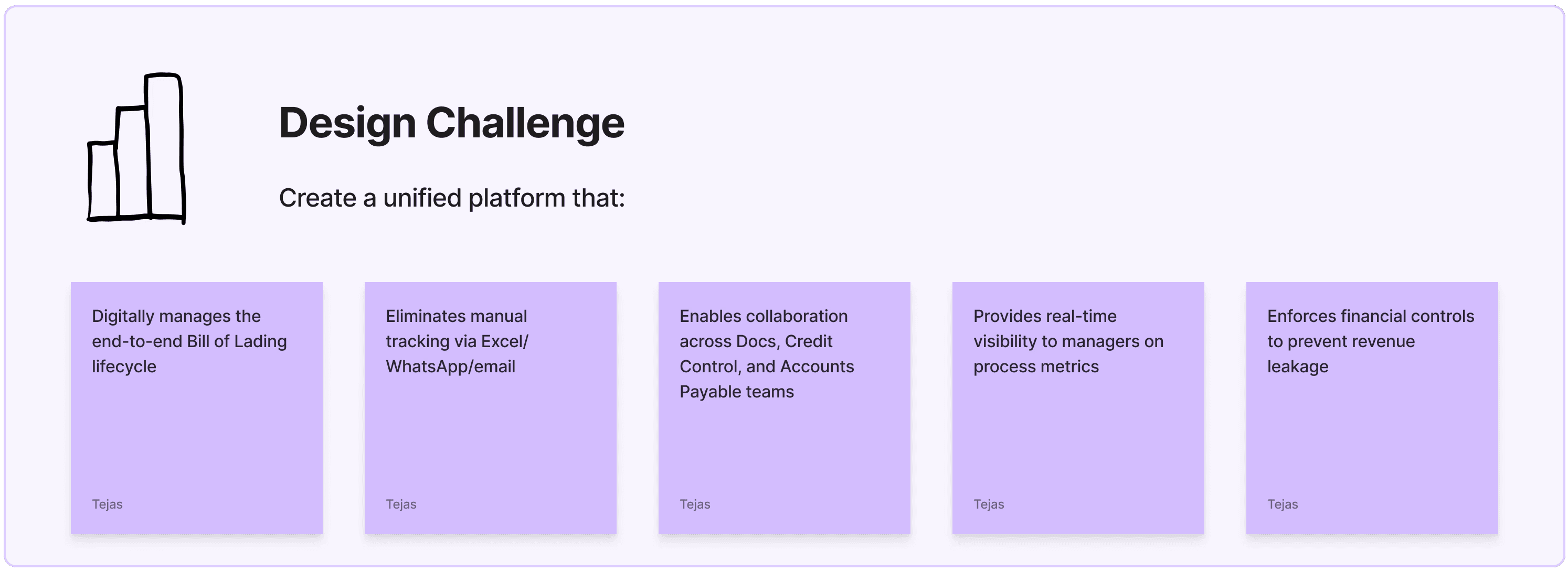
Design a collaborative platform that modernizes the Bill of Lading workflow for freight forwarders—an industry still dependent on Excel, WhatsApp, and paper documents to manage billions of dollars in cargo.
Role
Product Designer
Timeline
1 Week
Team
Solo
Industry
Shipping B2B SaaS
Industry Context
While companies like Expedia and Booking.com revolutionized passenger travel, international cargo—a $40+ billion industry—still operates like it's 1750. Freight forwarders managing 100+ weekly shipments rely on:
Manual Excel spreadsheet tracking
WhatsApp coordination across teams
Email chains for approvals Paper documents for compliance
The Bill of Lading (BL), a critical trade document proving cargo ownership, sits at the center of this broken workflow—causing delays, revenue leakage, and operational chaos.
🧩 Problem Statement
A $40 Billion Industry Running on WhatsApp
Here’s the thing. While Expedia revolutionized how we book flights, the people moving actual cargo around the world are still using Excel spreadsheets and WhatsApp groups.
Here’s the thing. While Expedia revolutionized how we book flights, the people moving actual cargo around the world are still using Excel spreadsheets and WhatsApp groups.
Multiple Excel files nobody can keep straight
WhatsApp groups where critical information gets buried
Email chains that turn into version control nightmares
Literal paper documents, in 2025
The result? Shipments get delayed, revenue leaks happen, and everyone stays permanently stressed
🌟 My Approach
Understanding the Domain (Research Phase)
Since this was a new industry for me, I started by deeply understanding the problem space:
1. Deconstructing the Brief
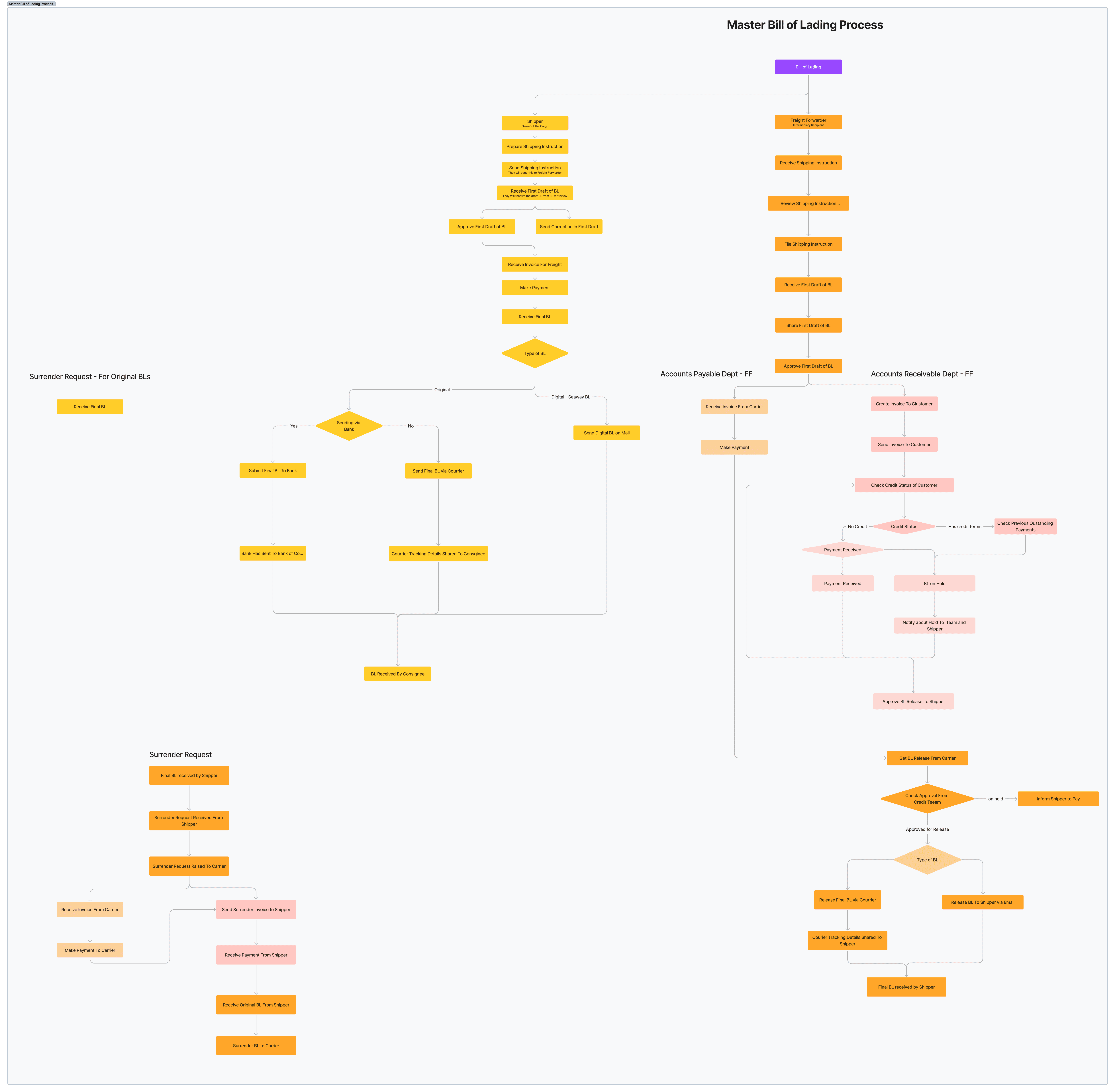
Broke down the 5-step BL workflow into discrete tasks and dependencies
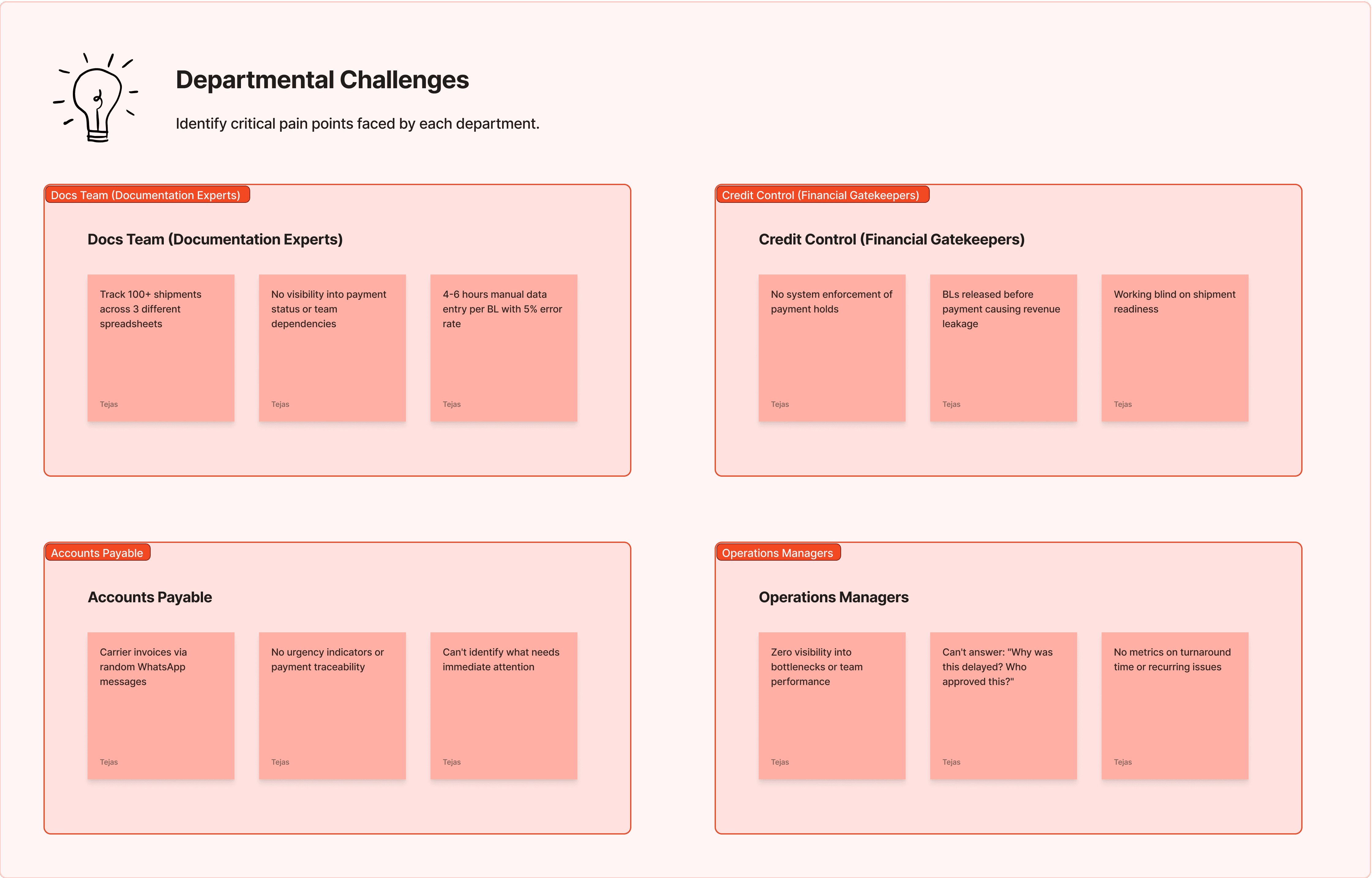
Identified all stakeholders and their pain points
Mapped current vs. ideal information flow

2. Understanding the Bill of Lading The BL isn't just paperwork—it's three things simultaneously:
Title of Goods: Whoever holds the original owns the cargo
Payment Proof: Required for financial settlement
Customs Document: Pre-requisite for clearance (like a passport for cargo)
👤 Personas

Priya
Docs Team Lead
🎯 Goal: Process BLs quickly and accurately, coordinate with all stakeholders
🤯 Frustration: "I maintain 3 different spreadsheets and spend my day on WhatsApp status updates. I have no idea what's blocking shipment releases until someone escalates."
🔍 Needs: Real-time visibility, automated data entry, clear task ownership

Rajesh
Credit Control Manager
🎯 Goal: Ensure payments received before BL release to prevent revenue leakage
🤯 Frustration: "I find out about releases after they happen. No system enforces credit holds—I rely on docs team remembering to check with me."
🔍 Needs: Automated hold enforcement, payment status visibility, customer credit tracking
Sneha
Accounts Payable
🎯 Goal: Pay carrier invoices on time to avoid BL release delays
🤯 Frustration: "I get carrier invoices through random WhatsApp messages. I don't know which are urgent or if payments were already made."
🔍 Needs: Centralized invoice tracking, payment history, urgency indicators
Mr. Sharma
Operations Manager
🎯 Goal: Oversee efficiency, identify bottlenecks, maintain client satisfaction
🤯 Frustration: "I can't answer basic questions: Why was this delayed? What's our average turnaround time? Where are the bottlenecks?"
🔍 Needs: Performance dashboards, bottleneck identification, team accountability
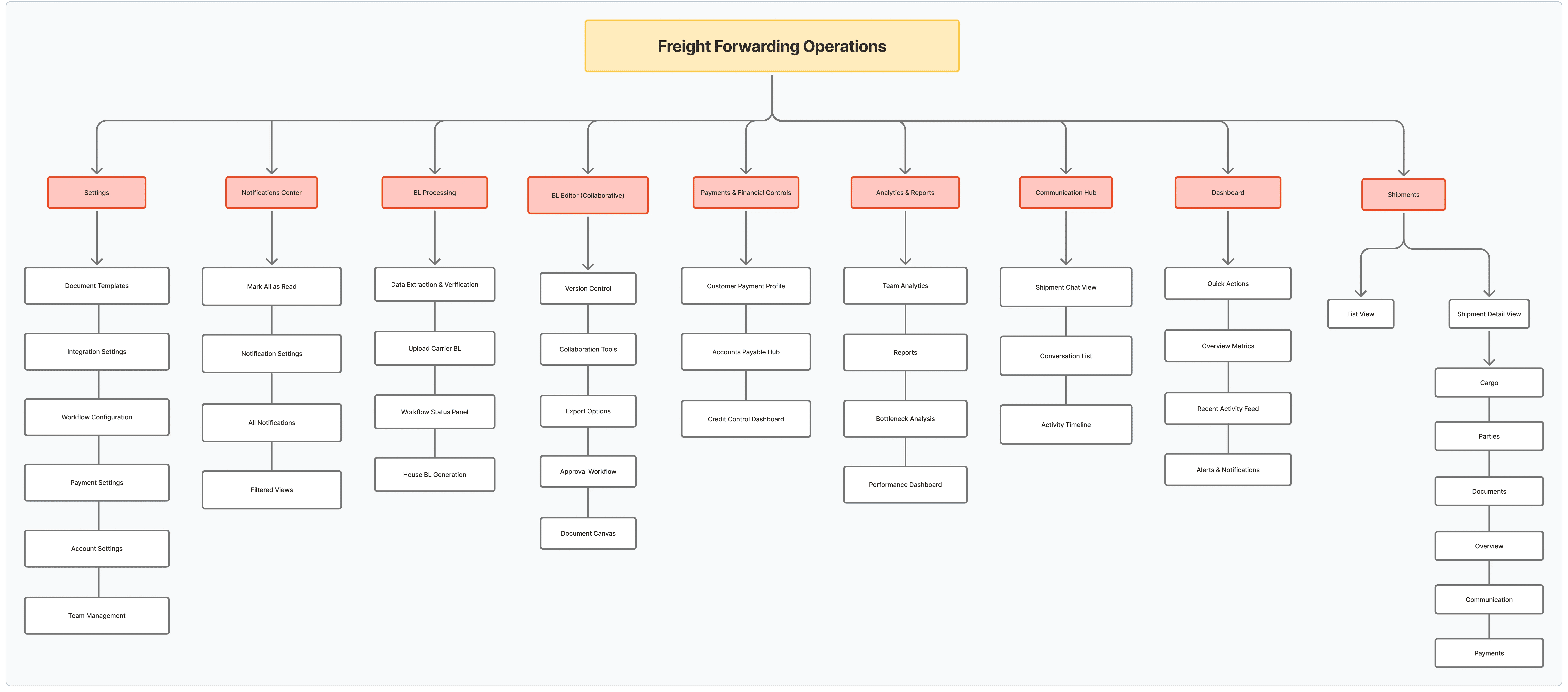
🎨 Information Architecture
🔀 Flow
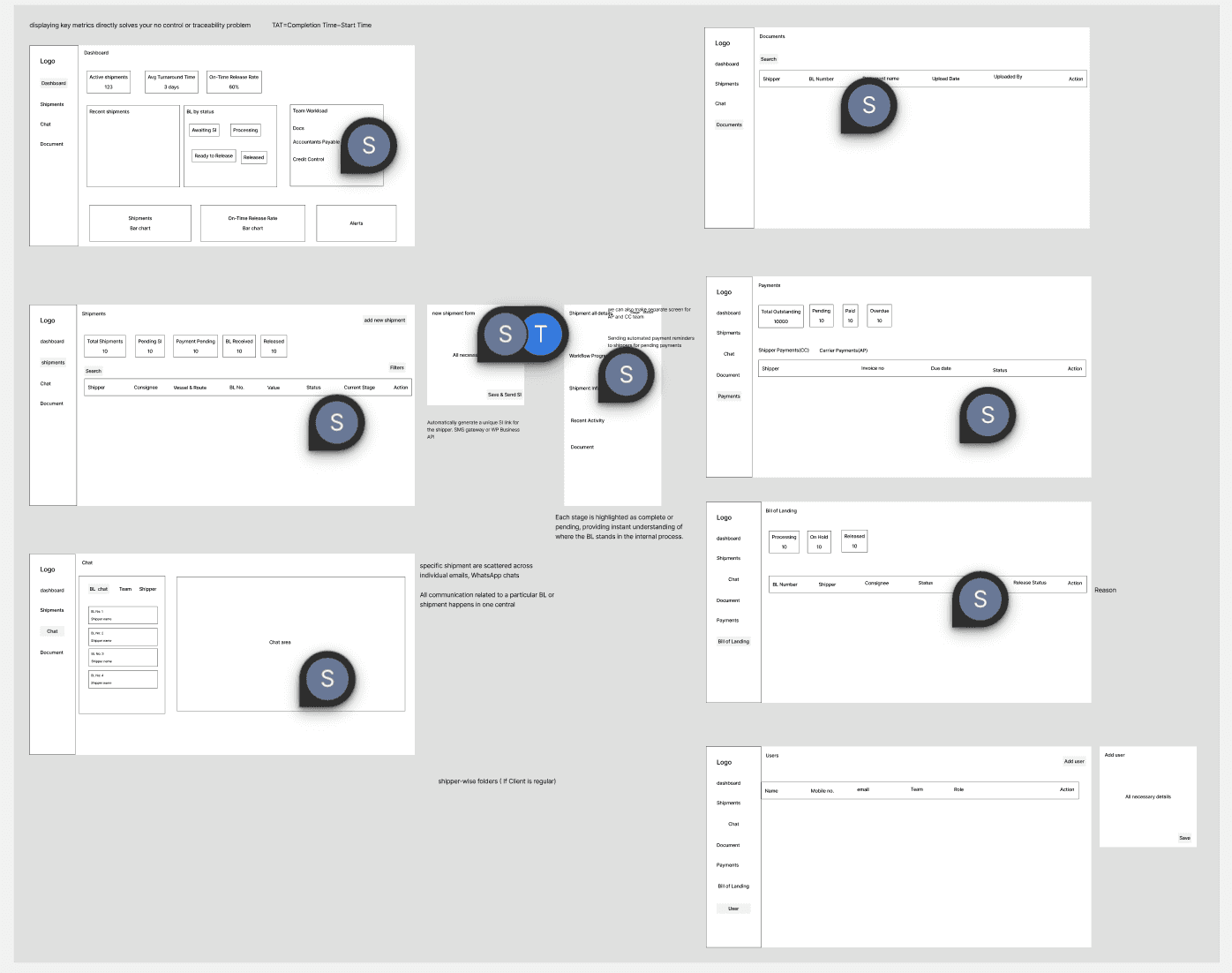
Wireframe